
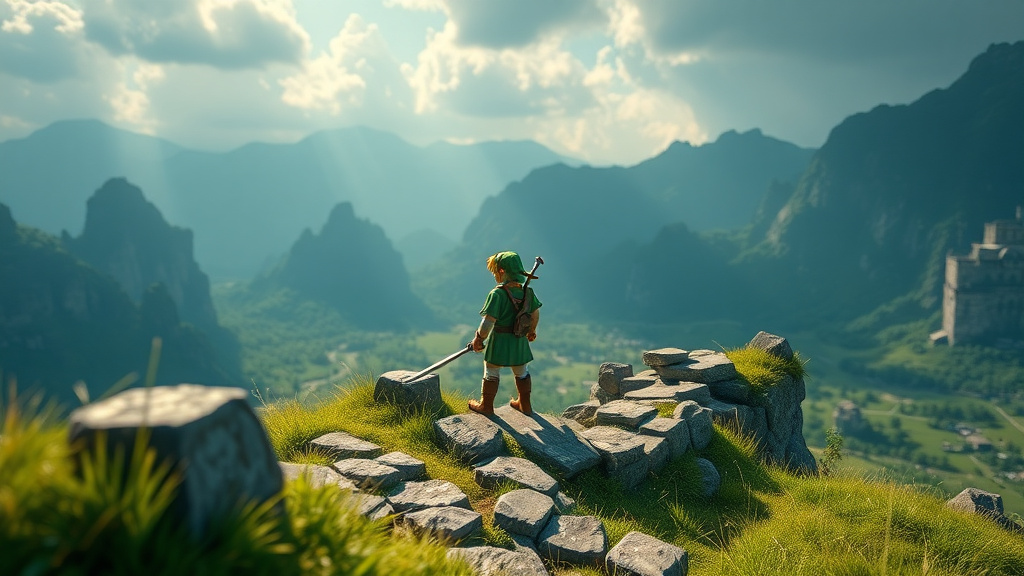
Since its debut in 1986, The Legend of Zelda has revolutionized gaming by masterfully integrating sophisticated problem-solving with immersive exploratory gameplay. The series’ groundbreaking features—from environmental puzzles to unrestricted exploration—have become design benchmarks that numerous creators aspire to emulate. This article explores how Zelda’s groundbreaking design philosophy has shaped modern game development, examining the key mechanics that made the brand influential and continue to inspire creators worldwide to challenge design conventions.
Groundbreaking Gaming Design Heritage
The Legend of Zelda series serves as a cornerstone in gaming history, establishing core design elements that have dramatically transformed the industry for decades. From the 1986 debut to contemporary titles, the franchise has repeatedly shown how carefully crafted puzzles and immersive exploration gameplay create memorable gaming moments. Studios around the world recognize the series’ impact on their design approach, noting how the series’ innovative approach to world-based narrative and dynamic world creation has become a standard of quality in action-adventure game creation.
What distinguishes Zelda’s legacy is its unwavering dedication to player autonomy and exploration. The series pioneered the idea of open-ended play mechanics within structured narratives, enabling players to tackle obstacles in varied sequences while preserving story consistency. This revolutionary approach removed strict advancement structures, instead rewarding curiosity and experimentation. Contemporary game creators continue studying Zelda’s design philosophy—the balance between direction and player choice, difficulty and approachability—to develop titles that resonate with audiences looking for meaningful, exploration-driven experiences that honor player skill and desire for autonomy.
Core Mechanics That Revolutionized Gaming
The Legend of Zelda series fundamentally transformed game design by establishing approaches that centered on player autonomy and creative problem-solving. Each sequel improved the formula, establishing standards for puzzle design, setting-based narrative, and non-linear progression. These breakthroughs didn’t merely define the franchise; they served as templates for creators in various genres, proving that deliberate system design could improve overall gaming experiences and establish enduring cultural influence.
Puzzle Design Innovation
Zelda transformed puzzle mechanics by weaving challenges directly into in-game worlds rather than separating them into separate sequences. Users came across puzzles organically while exploring dungeons, requiring them to examine their environment closely and use tools in creative ways. This approach converted puzzles from disconnected challenges into meaningful gameplay moments that reinforced environmental storytelling and player engagement, prompting numerous adventure games to adopt comparable environmental puzzle design approaches.
The series established the concept of progressive puzzle complexity, where early challenges demonstrated mechanics that later puzzles built on dramatically. Developers understood from Zelda’s methodology that guided puzzle sequences could naturally progress into complex puzzles without frustrating players. This steady increase in difficulty became industry standard, demonstrating how strategic mechanic advancement could sustain player interest throughout entire games while recognizing player improvement over time.
Exploring Adventure World
Zelda introduced non-linear exploration by enabling gamers to tackle dungeons in various orders, providing true autonomy within structured environments. This approach balanced creative direction with player autonomy, creating worlds that felt expansive yet purposeful. The franchise demonstrated that expansive gameplay could avoid compromising story consistency or creative vision, inspiring contemporary creators to design vast environments where player choice stayed central without compromising artistic vision.
The series masterfully utilized spatial design to foster player exploration through environmental narrative and implicit spatial hints. Players discovered hidden areas, quick routes, and alternative passages intuitively during their journey through environments, incentivizing careful exploration and attention to detail. This design methodology made exploration central to the experience rather than ancillary material, significantly transforming how studios designed environmental design and player freedom in adventure games across the industry.
Sector Influence And Modern Development
The Legend of Zelda’s influence shapes modern game development, with studios worldwide incorporating its core design foundations. Major franchises such as Dark Souls, Hollow Knight, and Breath of the Wild successors have woven Zelda’s iconic systems into their own structures. Publishers recognize that world-based narrative design, intuitive puzzle design, and player agency deliver commercially successful titles. The series’ influence demonstrates that carefully crafted gameplay transcends generations, setting timeless principles that continue driving innovation across the industry.
Contemporary creators acknowledge Zelda as core inspiration for their creative processes, with many citing individual entries as formative influences. Game design programs globally teach Zelda systems as foundational curriculum, ensuring future developers understand these concepts. The franchise’s emphasis on accessibility combined with depth has established itself as industry best practice. As technology evolves, developers preserve Zelda’s fundamental approach while exploring new opportunities, proving that exceptional design principles remain applicable across different platform or generation, establishing the series’ position as gaming’s most impactful franchise.
